Table of Contents
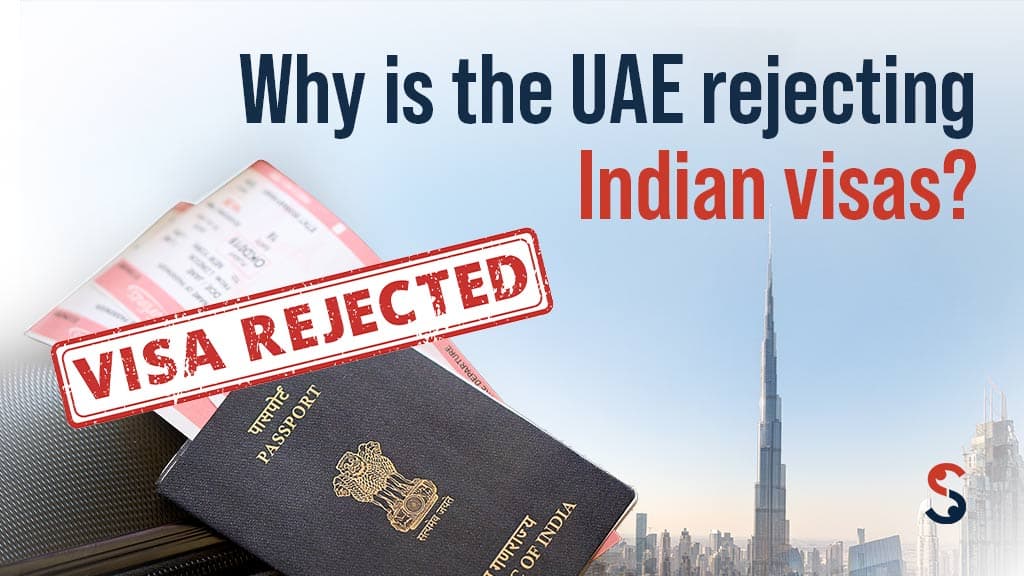
Are you wondering why the UAE is rejecting Indian visas in 2026? Visa rejection can be frustrating, especially when you’re planning a holiday, visiting family, attending business meetings, or exploring opportunities in Dubai.
Indian travellers sometimes experience visa application refusals due to documentation issues, eligibility requirements, immigration history, or other factors assessed by UAE authorities.
However, there is no confirmed blanket UAE visa ban on Indian citizens. Visa decisions are made according to the relevant immigration regulations and individual application circumstances.
Understanding possible rejection reasons and preparing accurate documentation can help applicants avoid preventable mistakes.
This guide explains the common reasons for UAE visa rejection for Indians, relevant visa requirements, and what to do if your application is refused.
The UAE continues to accept visa applications from eligible Indian citizens for tourism, family visits, business-related travel, employment, and residence.
However, submitting an application does not guarantee approval. Each visa category has specific requirements, and the immigration authorities assess applications individually.
A rejected application does not necessarily mean the UAE has stopped issuing visas to Indian nationals.
Applicants should verify current requirements through the Federal Authority for Identity, Citizenship, Customs and Port Security (ICP), the General Directorate of Residency and Foreigners Affairs (GDRFA), or their authorised visa sponsor.
There are several reasons why a UAE visa application may be refused. The exact reason depends on the visa category and immigration assessment.
Errors in personal details, passport numbers, dates of birth, or other application information can create problems during processing.
Applicants should ensure every detail matches their supporting documents and that all required information is provided.
Different visa categories require different supporting documents.
An application may face delays or refusal if mandatory information is missing, unclear, or inconsistent.
For example, some visit visa categories require sponsorship documentation, while certain other visas have separate financial or eligibility conditions.
Previous overstays, unresolved immigration penalties, entry restrictions, or other immigration issues can affect eligibility for future visas.
Applicants with a complicated immigration history should verify their current status through the appropriate UAE authority before submitting another application.
Choosing a visa category that does not match the intended purpose of travel can cause application difficulties.
Tourist, employment, residence, and business-exploration visas have different conditions.
Indian entrepreneurs visiting the UAE to assess investment opportunities should review the appropriate visa category rather than assuming a tourist visa covers every business-related purpose.
A passport that does not meet the applicable validity requirements may prevent an application from progressing.
Many UAE entry visa categories require passports to remain valid for at least six months, although requirements should be checked for the specific visa.
Applicants should also ensure that uploaded passport copies and photographs meet the prescribed specifications.
An existing UAE visa, unresolved cancellation, or inconsistent immigration record may require clarification before a new application can proceed.
Applicants should check their immigration status instead of submitting repeated applications without addressing the underlying issue.
Certain visa categories have requirements relating to sponsorship, accommodation, financial capacity, professional status, or other eligibility factors.
Failure to satisfy the applicable criteria may result in refusal.
Not every requirement applies to every visa type, so applicants should refer to the conditions published for their chosen category.
The UAE has introduced changes to selected entry and visit visa categories in recent years.
In September 2025, the ICP announced additional visit visa categories and revisions to certain existing visa conditions.
Further changes announced in June 2026 expanded eligibility for specified entry visa arrangements previously available to eligible Indian nationals.
These developments do not establish a general ban on Indian visa applicants.
Because immigration conditions can change, travellers should verify the latest requirements for the specific visa category before applying.
Although approval remains at the discretion of the relevant authorities, applicants can reduce avoidable errors by following these steps.
Ensure your passport meets the applicable validity requirements and that your name, passport number, nationality, and date of birth match the application.
Provide all mandatory documents in the required format.
Avoid unclear scans, inconsistent information, or unsupported claims in your application.
Select a visa suitable for your travel purpose, whether tourism, family visits, employment, business exploration, or residence.
If you previously held a UAE visa, check whether it remains active or requires formal cancellation.
Resolve outstanding immigration issues before reapplying.
Provide the required financial or sponsorship documentation when applicable to your visa category.
Do not assume that bank statements, return tickets, or hotel bookings are mandatory for every type of application.
Use official immigration services, eligible sponsors, or properly authorised application channels.
Avoid agents offering guaranteed approvals or claiming they can bypass immigration procedures.
If your UAE visa application is rejected, the next step is to understand whether the application can be corrected or whether additional clarification is required.
Step 1: Check your application status. Review the status through the relevant ICP or GDRFA service or contact your authorised sponsor.
Step 2: Ask for available rejection details. Immigration authorities may not disclose every reason for refusal, but your sponsor or authorised application provider may be able to clarify the status.
Step 3: Review the documents. Check for errors in passport information, application details, supporting documents, and visa eligibility.
Step 4: Resolve outstanding issues. Address any previous immigration matters or documentation problems where possible.
Step 5: Consider reapplying if eligible. Submit another application only after reviewing the requirements and addressing any identifiable issues.
Repeated applications without correcting a known problem may lead to further expense without improving the outcome.
Yes, applicants may be able to reapply after a UAE visa rejection, depending on the reason for refusal and their current eligibility.
There is no universal waiting period that applies to every rejected UAE visa application.
Some applicants may be able to submit a corrected application, while others may need to resolve immigration restrictions or other eligibility issues first.
Before reapplying, check with the relevant immigration authority or authorised sponsor.
No. Tourist visas and employment-related visas are assessed under different requirements.
Tourist visa applications generally concern temporary entry for leisure or visiting purposes.
Employment and residence-related processes involve additional conditions, including employer sponsorship or other eligible residence arrangements, applicable permits, and immigration requirements.
An applicant who is eligible for a tourist visa is not automatically eligible for an employment visa, and vice versa.
Indian entrepreneurs planning to establish a UAE company should also distinguish between entry visas used for exploring business opportunities and residence arrangements associated with qualifying investment or company ownership.
Understanding UAE visa requirements is important for Indian entrepreneurs planning to expand their businesses or establish a presence in Dubai.
At Shuraa India, our consultants assist eligible entrepreneurs with UAE business setup, company formation, and related investor or residence visa procedures.
Our services include:
Although visa approval depends on the relevant UAE authorities, preparing accurate documents and selecting the correct application process can help avoid unnecessary complications.
Planning to establish a business in the UAE? Contact Shuraa India to discuss your company formation and related visa requirements.
No confirmed blanket ban applies to Indian visa applicants. Eligible Indian citizens can apply for UAE visas, although approval depends on visa requirements and individual immigration assessments.
Possible reasons include incorrect information, incomplete documents, immigration violations, unresolved visa records, or failure to meet eligibility requirements. The exact reason depends on the individual application.
Yes, reapplication may be possible depending on your eligibility and rejection circumstances. Review the application, correct identifiable issues, and check with the relevant immigration authority before reapplying.
You can check application status through the relevant ICP or GDRFA services or contact your authorised visa sponsor using the application reference details.
A previous rejection does not automatically mean every future application will fail. However, unresolved immigration restrictions or eligibility issues may affect subsequent visa decisions.
Eligible Indian entrepreneurs may apply for suitable UAE entry visas for business exploration or other permitted purposes. Requirements depend on the selected visa category and immigration regulations.
No. Visa approval is decided by the relevant UAE immigration authorities. Agents and consultants may assist with documentation but cannot guarantee that an application will be approved.

About the author
Ritish SharmaRitish Sharma is a professional writer and UAE business advisor with expertise in corporate regulations and company setup. He helps Indian entrepreneurs understand and navigate the UAE’s dynamic business landscape, simplifying complex legal and business concepts. With actionable insights and practical guidance, Ritish empowers Indian businesses to establish, grow, and succeed in the UAE market confidently.
View all postsGet clear support on licensing, jurisdictions, visas, banking, and setup costs, all from one expert team.