
Table of Contents
Dubai is often seen as a dream destination where people can earn well and keep most of their money because it’s “tax-free.” This idea attracts thousands of expats, entrepreneurs, and investors every year. The absence of personal income tax in modern cities makes Dubai stand out compared to many other countries. It has become a significant reason why many choose to move here.
But the reality is slightly different. Although there is no income tax, Dubai is not entirely tax-free. The government has introduced VAT, corporate tax, and excise duties to support the economy. So, when we hear “Dubai is tax-free,” it’s partly true but also a myth.
In this blog, we’ll explore whether Dubai is truly tax-free or if it’s more about innovative taxation policies that still make it one of the most attractive places for expats and businesses.
When people hear about Dubai, one of the first things that comes to mind is that it’s a “tax-free haven.” But is Dubai truly tax free? The answer is both yes and no. Indeed, Dubai does not impose personal income tax on expatriates. That’s what makes it very attractive for professionals, entrepreneurs, and investors from around the world. You get to keep your full salary without deductions, which is rare in most countries.
However, this doesn’t mean Dubai is entirely tax-free. Additional taxes and fees may apply. For example, the UAE has Value Added Tax (VAT) at 5% on goods and services. Specific industries, such as oil and gas or foreign banks. It may also be subject to corporate taxes. Additionally, there are municipal taxes on items such as property rent, hotel stays, and utility bills.
So, while Dubai offers a unique tax-friendly environment, calling it completely “tax-free” is a myth. The real benefit lies in the absence of income tax, combined with low overall tax rates compared to many countries. This is what makes Dubai one of the most attractive places in the world to live, work, and do business.
Dubai has built its global reputation as a tax-friendly destination, but that doesn’t mean it is 100% tax-free. Instead, the city has a unique tax system designed to attract expats, businesses, and investors, while still generating revenue through indirect taxes and duties. Let’s break it down:
The biggest attraction for expats in Dubai is the absence of personal income tax. Unlike many countries where a chunk of your salary goes to the government, in Dubai, you take home your entire paycheck. This is why so many professionals and entrepreneurs move here to maximise their savings.
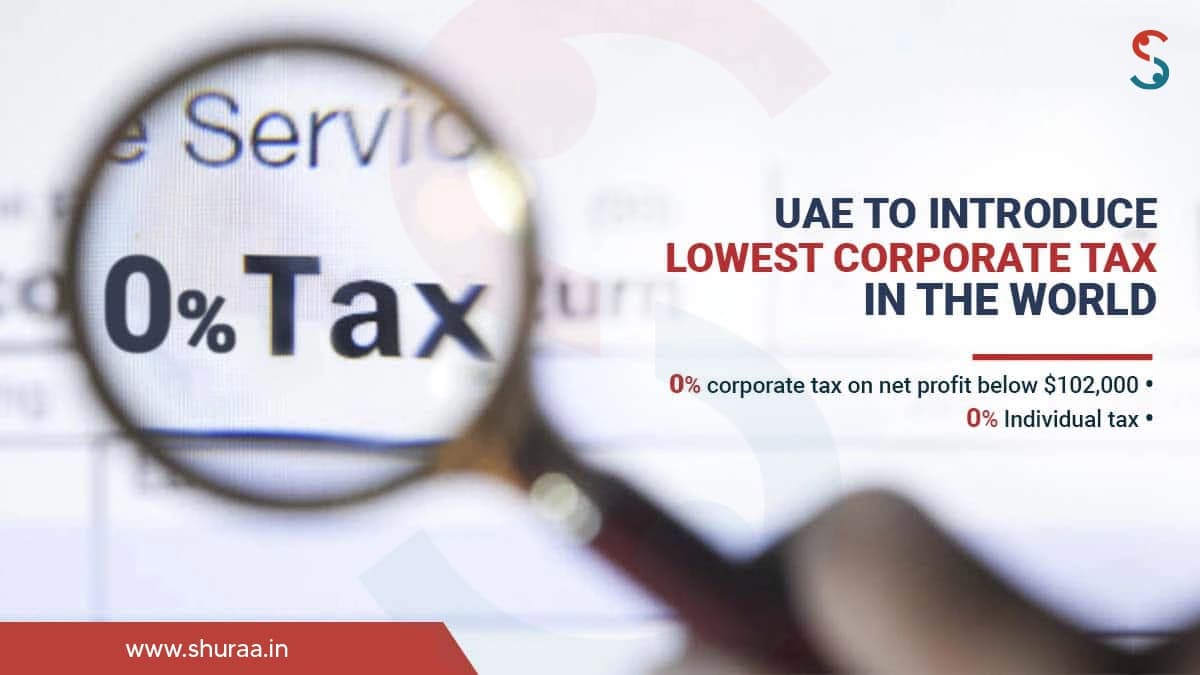
Starting from June 2023, the UAE introduced a 9% corporate tax on business profits. However, this only applies to companies making profits above AED 375,000. Small businesses earning less than this threshold are exempt from this requirement.
This makes Dubai especially attractive for startups and small enterprises, while larger companies still benefit from relatively low tax rates compared to global standards.
Introduced in 2018, Dubai applies a 5% VAT on most goods and services. While the rate is low compared to Europe or other parts of the world. It still means that day-to-day expenses include some level of taxation. Certain essential items, such as healthcare and education, may be zero-rated or exempt from VAT.
To discourage the consumption of harmful products, the UAE imposes excise duties. These include:
This not only boosts government revenue but also promotes healthier lifestyle choices.
Dubai is a central hub for international trade, and imported goods are often subject to customs duties. The standard rate is 5% of the product’s value, although certain goods may be exempt or taxed at higher rates depending on the type of product.
Dubai doesn’t charge income tax, but it does collect revenue through corporate tax, VAT, excise duties, and customs duties.
This balanced system keeps the city attractive for expats and investors while ensuring the government has funds to invest in infrastructure, healthcare, and public services.
Get a free UAE tax planning session for your Indian-owned business.
One of the biggest reasons professionals and entrepreneurs move to Dubai is the absence of personal income tax. For expats, this means your entire salary is yours to keep, no monthly deductions, no income tax filings, and no hidden charges. This is a significant advantage compared to countries where income tax can consume 20–40% of earnings.
Another benefit is that Dubai does not tax your foreign income, investments, or savings. If you have money in overseas bank accounts, property investments abroad, or passive income sources, Dubai won’t tax them. This makes it an attractive hub for high-net-worth individuals and business owners who want to grow their wealth without additional tax burdens.
However, it’s essential to understand that living in Dubai doesn’t automatically free you from taxes in your home country:
Dubai offers expats a tax-free salary and no tax on foreign wealth, but you should always check the tax rules of your own country to avoid surprises.
Many people believe Dubai is an entirely tax-free paradise, but the truth is a bit more balanced. Here are some common myths and their realities:
Reality: Expats don’t pay personal income tax, but there are indirect taxes like VAT (5%), excise tax on certain goods (tobacco, energy drinks, soft drinks), and a 9% corporate tax for businesses above a certain profit level.
Reality: While Dubai is business-friendly, companies are subject to corporate tax (on profits exceeding AED 375,000), as well as trade license fees, customs duties, and other charges, depending on the activity.
Reality: Buying property comes with a 4% property transfer fee, and renting property includes a housing fee (often added to utility bills).
Reality: Residents often pay government service fees, visa renewal charges, road tolls (Salik), and municipal fees, which serve as indirect taxes.
Reality: Your home country’s tax laws matter. For example, US citizens must still report worldwide income, even if they live in Dubai. Indian residents may also have tax obligations if they qualify as Indian tax residents.
Dubai is tax-friendly (no income tax for individuals), but not entirely tax-free. Instead, it follows a system of low direct tax + indirect taxes and fees.
Dubai has built a reputation as one of the most attractive destinations for both individuals and companies, due to the unique tax structure. Let’s look at the key benefits:
Since there is no personal income tax, expats can take home their full salary. This makes Dubai especially appealing to professionals who want to save more compared to other countries, where a significant portion of their income is allocated to taxes.
Dubai offers business-friendly regulations, easy company setup processes, and clear rules for foreign ownership. This encourages entrepreneurs and investors to launch or expand their businesses without unnecessary hurdles.
With its prime location between Europe, Asia, and Africa, Dubai has become a significant hub for international trade, finance, and logistics. The tax advantages make it even more attractive for global companies looking to expand operations.
Along with tax benefits, Dubai offers a high standard of living, modern infrastructure, top-notch healthcare, and luxurious lifestyle options. This makes it not just a place to work, but also a place to enjoy life.
Businesses can reinvest more profits into growth because of the low corporate tax rate (9%) compared to many other countries. Free zones also offer added tax exemptions and benefits.
Dubai’s tax system enables individuals to save more, businesses to grow faster, and together, they enjoy the benefits of living in a global, modern, and opportunity-rich city.
No income tax. No capital gains. Our tax advisors help Indian businesses optimise their UAE structure for maximum savings.
Dubai’s tax system stands out when compared to major economies:
| Country | Personal Income Tax | Corporate Tax | VAT/GST | Key Observation |
| Dubai (UAE) | 0% | 9% (above AED 375k profit) | 5% VAT | Maximum salary retention + low overall tax burden |
| India | 5% – 30% (slab-based) | 22% – 30% | 18% GST | High tax outflow reduces savings |
| UK | 20% – 45% | 25% | 20% VAT | Heavy personal taxation, lower savings |
| US | 10% – 37% (federal) + state taxes | 21% | No federal VAT but state sales taxes apply | Complex tax system + worldwide income reporting for citizens |
Setting up a business in Dubai or understanding its tax system can feel overwhelming, especially for first-time expats and entrepreneurs. That’s where Shuraa India steps in as your trusted guide.
We provide end-to-end support to help you handle Dubai’s business setup and tax rules with ease. Our services include:
With Shuraa India by your side, you don’t just start a business in Dubai; you start an innovative, compliant one, with the right strategy for success.

About the author
Ritish SharmaRitish Sharma is a professional writer and UAE business advisor with expertise in corporate regulations and company setup. He helps Indian entrepreneurs understand and navigate the UAE’s dynamic business landscape, simplifying complex legal and business concepts. With actionable insights and practical guidance, Ritish empowers Indian businesses to establish, grow, and succeed in the UAE market confidently.
View all postsSpeak with Shuraa India for clear guidance on licensing, jurisdictions, visas, banking, and setup costs.