Table of Contents
If you’re an entrepreneur in India, you’ve likely noticed that the world is getting a lot smaller. In 2026, the business bond between India and the UAE is at an all-time high. Thanks to recent trade agreements, it’s no longer just big corporations making the move – thousands of Indian startups and small business owners are now looking to register a company in Dubai from India. In fact, Indian investors are currently the top foreign group starting new businesses in the city.
But why is everyone heading to Dubai? Every year, thousands of Indian entrepreneurs register companies in Dubai across sectors like trading, consulting, e-commerce, logistics, and professional services. Here is why so many Indian founders are registering their companies there:
Setting up abroad might sound intimidating, but it’s actually more straightforward than you think. In this guide, we’ll break down exactly how you can take your Indian business to Dubai this year without the headache.
In 2026, Dubai has become one of the most practical and profitable destinations for Indian entrepreneurs to start a business.
Recently, the UAE President visited India and set a massive new goal: doubling bilateral trade to $200 billion by 2032. For an Indian business owner, this means the CEPA trade agreement is now in full swing, offering zero-duty access to almost 90% of Indian goods entering Dubai. If you’re in manufacturing, textiles, or food, Dubai is an extension of your home market.
Opening in 2026, Bharat Mart in Jebel Ali (Dubai) is a game-changer for Indian SMEs. It’s a 2.7 million-square-foot facility with 1,500 showrooms specifically for Indian exporters. You can display and store your products in Dubai, allowing you to sell directly to buyers from Africa and Europe without expensive middlemen or long shipping delays from India.
Dubai allows 100% ownership for foreign nationals in most business activities – both in the Mainland and Free Zones. Indian entrepreneurs don’t need a local partner just to start or run their business, which gives full control and peace of mind.
With global trade tensions rising, some countries have doubled tariffs on Indian-made goods (like jewellery and textiles). However, because of the India-UAE CEPA deal, the UAE remains a safe harbour. By adding just a small amount of value to your product in a Dubai Free Zone (like final packaging or assembly), your product officially becomes “Made in UAE.”
One of the biggest reasons Dubai is popular in 2026 is that you can register a company remotely from India. From documentation to approvals, most steps can be handled online. Travel is usually required only for banking or visa formalities, if at all.
Dubai has a globally recognised banking system with access to multi-currency accounts, international transfers, and stable financial regulations. For Indian entrepreneurs dealing with overseas clients, payments and fund management become much easier. Thanks to a new agreement to link India’s UPI with the UAE’s Jaywan payment system, cross-border payments have become nearly instant and much cheaper.
Dubai offers different business structures to suit various goals, budgets, and industries. Before picking a legal form (like an LLC), you must choose where your company will be registered. This is the most important decision you’ll make.
A Mainland company is licensed by the Dubai Department of Economy & Tourism (DET) and allows businesses to operate anywhere in the UAE and beyond. If you plan to serve clients within the UAE and need unlimited visa quotas, the Mainland is the best choice.
Popular Mainland Business Structures:
1. LLC (Limited Liability Company)
The Gold Standard for Indian business owners. In 2026, you can now have 100% ownership of an LLC in most sectors without needing a local Emirati partner.
2. Sole Proprietorship
This is a business owned 100% by one person. Unlike an LLC, you have unlimited liability, meaning you are personally responsible for all business debts.
3. Branch of a Foreign Company
If you already have a successful company in India (e.g., in Mumbai or Delhi) and just want an extension in Dubai, you can open a branch.
4. Civil Company
A Free Zone company operates within designated zones regulated by specific Free Zone authorities. Free Zones are ideal for import/export businesses, e-commerce, consulting, and tech startups.
Popular Free Zone Business Structures:
1. Free Zone Establishment (FZE)
An FZE is a single-shareholder company, ideal for solo entrepreneurs or consultants starting their business in Dubai. It offers full control, limited liability, and a straightforward setup process. Many Indian founders choose this structure when launching small to mid-sized ventures.
2. Free Zone Company (FZCO/FZ-LLC)
This structure is suitable for multiple shareholders – individuals or corporate entities. It’s commonly used by startups, partnerships, and family-run businesses from India that plan to scale operations in Dubai while maintaining limited liability protection.
An Offshore company is designed for businesses operating outside the UAE, offering tax benefits and confidentiality. They cannot conduct business inside the UAE. Offshore companies are ideal for investors, holding companies, and businesses engaged in international trade.
Register your Dubai company today — free step-by-step guidance.
Your business license in Dubai depends on the activity you plan to carry out. Choosing the right license from the start is important, as it defines what your company is legally allowed to do.
A Commercial License is required for businesses involved in buying, selling, importing, exporting, or trading goods. This is one of the most common licenses chosen by Indian entrepreneurs, especially for trading, general commerce, and distribution businesses. If you are using Bharat Mart to store or display products, this is the license you will need. It allows you to move goods freely across the globe.
Permitted Activities:
This license is suitable for service-based businesses that rely on skills, expertise, or professional knowledge. It’s ideal for consultants, IT professionals, marketing agencies, designers, trainers, and freelancers. Many Indian professionals opt for this license due to its flexibility and lower setup requirements.
Permitted Activities:
An Industrial License is required for businesses involved in manufacturing, production, or industrial activities. This includes factories, assembly units, and processing businesses. It usually requires additional approvals, warehouse space, and compliance with safety and environmental regulations.
Permitted Activities:
An E-commerce License allows businesses to sell products or services online, either within the UAE or internationally. This license is popular among Indian entrepreneurs running online stores, digital platforms, or dropshipping businesses from Dubai.
Permitted Activities:
In 2026, the Freelancer path is the fastest way for a solo creator to live and work in Dubai. It is best for writers, photographers, independent IT tutors, and media professionals. It’s a permit issued to you as an individual, not as a company. It’s significantly cheaper than a full trade license but doesn’t allow you to hire employees.
Who Is This For:
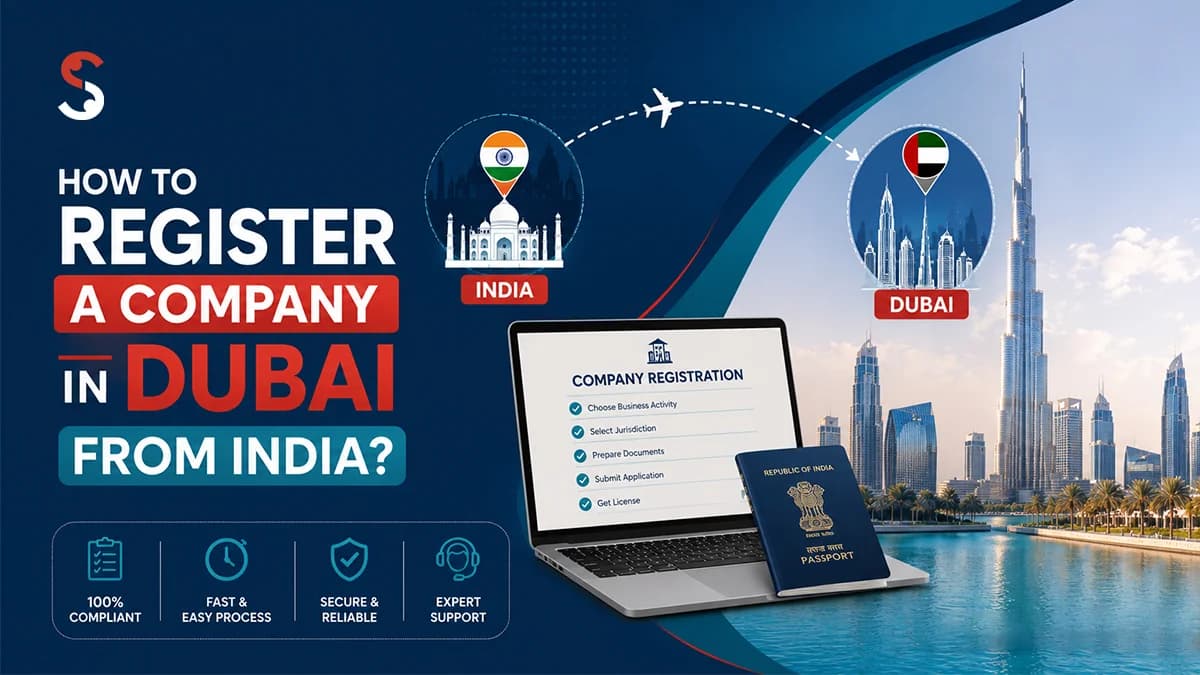
The process of company setup in Dubai from India in 2026 is a streamlined, digital-first experience. Because of recent updates, you can now complete nearly 90% of the process remotely without leaving India.

Start by clearly defining what your business will do. Dubai has a predefined list of approved business activities, and your license will be issued based on this selection. Choosing the right activity is crucial, as it affects licensing, approvals, and costs.
This is arguably the most important strategic decision in your Dubai company setup, as it determines ownership structure, costs, market access, and operational flexibility. Three Main Options:
Choose Mainland If:
2026 Update: 100% foreign ownership is now available for most commercial and professional activities, removing the previous 51% UAE partner requirement for many sectors.
Choose Free Zone If:
Choose Offshore If:
In 2026, you can check name availability instantly through the Invest in Dubai portal or your chosen Free Zone’s website. Avoid offensive words, religious references, or names of government bodies.
Initial approval confirms that UAE authorities have no objection to you starting the business. At this stage, you submit basic details about the company, shareholders, and business activity.
You’ll need to provide documents such as passport copies, photographs, and business details. Depending on the setup, additional documents like MOA or shareholder resolutions may be required.
Depending on your license type, you may need a physical office, flexi-desk, or virtual office. Many Free Zones offer affordable workspace options, especially for startups and small businesses.
Once your documents are uploaded and the office space is confirmed, you’ll receive a payment link. After payment, your Digital Trade License is emailed to you. You are now officially a business owner in Dubai.
With your license in hand, you can apply for your 2-year Investor Visa. You can start the visa process from India. You only need to fly to Dubai for a quick medical test and to collect your Emirates ID card.
The final step is opening a corporate bank account in Dubai. While documentation requirements are strict, having a properly structured company and clear business activity helps ensure smoother approval.
We’ve registered 1,00,000+ companies in Dubai — our experts handle every step from name registration to trade license.
The documentation process to register a company in Dubai from India is fairly straightforward. Most documents are simple personal and business details, and many can be submitted digitally during the initial stages.
Basic Documents Required (For Indian Nationals):
Business-Related Documents:
Additional Documents (If Applicable):
For those wanting to form a proper company (LLC), Free Zone packages are highly popular. A standard professional or e-commerce license in 2026 generally starts between ₹2.8L and ₹4.1L. Many zones, like IFZA, offer “all-in-one” bundles that include a virtual office address and one investor visa eligibility, helping you avoid separate rental costs.
If you plan to open a physical shop or trade directly with the local Dubai market, a Mainland license is required. These typically start at ₹3.4L to ₹5.7L for commercial activities.
Mandatory Visa & Residency Costs:
Even if you own the company, you need a residency visa to open a bank account and live in the UAE.
Annual license renewals, office lease renewals, and visa renewals are also your recurring expenses you should plan for in your budget.
Dubai offers multiple visa options for Indian business owners, depending on how actively they want to be involved in the business and whether they plan to live in the UAE.
This is the most common route for Indian founders. Once you register your company (Mainland or Free Zone), you are eligible for this residency.
UAE Golden Visa has become much more accessible for pioneering entrepreneurs and startup founders.
The Green Visa is a self-sponsored residency designed for those who want more flexibility than a standard visa but aren’t ready for the Golden Visa.
If you aren’t ready to commit to a company setup yet, this is a specialized entry permit for 2026.
Starting a company in Dubai from India is a well-planned business decision backed by strong India–UAE ties, business-friendly policies, and global opportunities. With clear regulations, tax efficiency, and easy access to global markets, the path is far more straightforward than it once was.
That said, getting the setup right from day one makes all the difference. From choosing the right jurisdiction and license to handling documentation, visas, and bank accounts, professional guidance can save you time, cost, and unnecessary stress. Shuraa India supports Indian entrepreneurs at every stage – before, during, and even after company registration. If you’re considering taking the next step, exploring expert support can help turn your Dubai business plans into a smooth and successful reality.
Yes, Indian citizens are currently the most active foreign group starting businesses in Dubai. Under the 2026 regulations, Indian entrepreneurs can own 100% of their company in most sectors (Mainland and Free Zone) without needing a local Emirati partner or sponsor.
In many cases, company registration can be completed within a few days to a couple of weeks, depending on the business activity and jurisdiction.
Yes. Thanks to the Invest in Dubai digital platform and the UAE Pass app, nearly the entire process – from name reservation to receiving your digital trade license, can be completed online from India. You generally only need to visit Dubai once to complete your medical test for the residency visa.
The UAE introduced a federal corporate tax of 9%, but it is very entrepreneur friendly. Small businesses are exempt if their annual profit is below approx ₹85 Lakhs. Additionally, many Free Zone companies still qualify for a 0% tax rate on income earned from outside the UAE.
While you can start the application and upload documents to digital banks (like Wio or Zand) from India, most traditional banks still require a physical meeting or a video verification once you have your Emirates ID. It is highly recommended to plan a short 3-day trip to Dubai once your visa is processed to finalise your banking.

About the author
Ritish SharmaRitish Sharma is a professional writer and UAE business advisor with expertise in corporate regulations and company setup. He helps Indian entrepreneurs understand and navigate the UAE’s dynamic business landscape, simplifying complex legal and business concepts. With actionable insights and practical guidance, Ritish empowers Indian businesses to establish, grow, and succeed in the UAE market confidently.
View all postsSpeak with Shuraa India for clear guidance on licensing, jurisdictions, visas, banking, and setup costs.