Table of Contents
The UAE’s non-oil foreign trade reached a record AED 3.8 trillion (over US$1.03 trillion) in 2025. This growth represents a 27% increase year-on-year and surpassed the UAE’s 2031 economic target six years ahead of schedule.
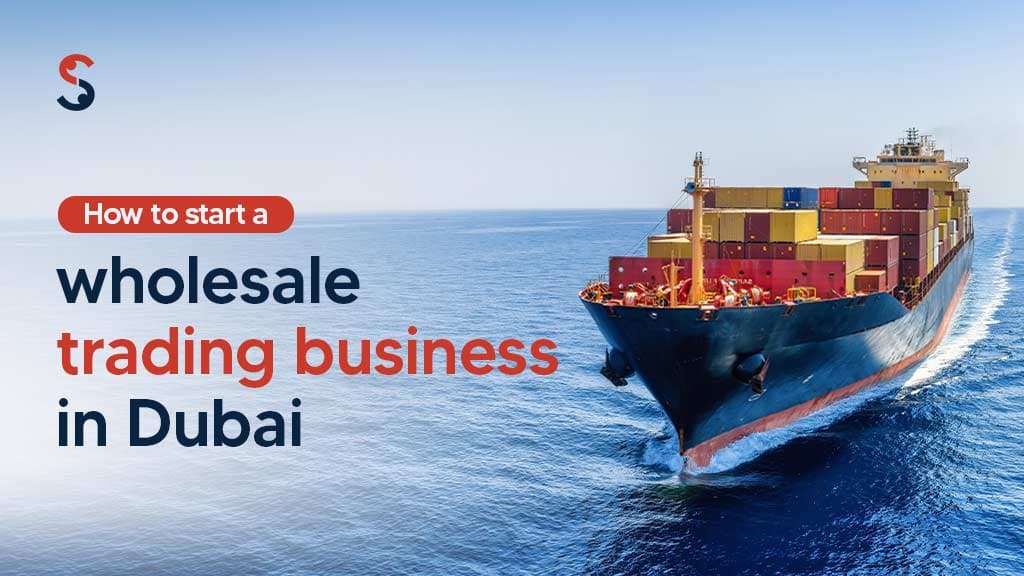
One of the key contributors to this remarkable growth is the wholesale trading sector of the country. Every day, thousands of containers move through its ports across Asia, Europe, Africa, and the Middle East. Whether you plan to import electronics from China, distribute textiles from India, trade FMCG products, or supply construction materials across the GCC, Dubai offers the right infrastructure and connectivity to support your growth.
And this continued growth creates significant opportunities for entrepreneurs who wish to start a business in the wholesale sector. However, building a successful wholesale trading business in Dubai involves multiple steps during the company formation process.
In this guide, you will learn everything you need to know to start a wholesale trading business in Dubai, so you can launch your business with confidence.
A wholesale trading business purchases products in bulk directly from manufacturers or authorised suppliers and resells them to retailers and commercial buyers. A wholesale business doesn’t sell directly to end customers.
Unlike retail businesses, wholesale companies focus on high-volume transactions, competitive pricing, and efficient supply chain management.

Some of the most common wholesale trading sectors in Dubai include:
| Industry | Popular Wholesale Products |
|---|---|
| Electronics | Mobile phones, accessories, consumer electronics |
| FMCG | Food products, beverages, packaged goods |
| Construction | Building materials, hardware, electrical supplies |
| Fashion & Textiles | Garments, fabrics, footwear, accessories |
| Automotive | Spare parts, tyres, lubricants |
| Healthcare | Medical equipment, pharmaceuticals (subject to approvals) |
| Beauty | Cosmetics, perfumes, personal care products |
You may require a specialised wholesale trading license for specific product categories or a general trading license which allows you to trade multiple approved categories under a single license. Thay depends on your business model and will be subjected to the licensing authority’s regulations.
Choosing the right license from the beginning is important, as it affects your compliance requirements and overall setup costs.
Dubai has transformed itself from a regional trading port into one of the world’s largest commercial hubs. Its strategic location, modern infrastructure, and business-friendly policies create an ecosystem where wholesale businesses can expand efficiently across local and international markets.
Here are some of the biggest advantages of setting up a wholesale business in Dubai:
Dubai is located at the crossroads of Europe, Asia, and Africa. This strategic location makes it easier for wholesale businesses to manage regional distribution and also serve multiple international markets from a single location.
Dubai is home to some of the world’s most advanced logistics facilities. That includes Jebel Ali Port, one of the busiest container ports globally, and Dubai International Airport, a major international cargo hub. Combined with an extensive road network and modern warehousing facilities, businesses benefit from faster deliveries and smoother supply chain operations.
Dubai is recognised as one of the world’s leading re-export centres. Businesses can source products from global manufacturers and redistribute them across the GCC, Africa, South Asia, and beyond. This makes wholesale trading particularly attractive for companies with regional expansion plans.
The UAE offers several advantages that continue to attract international investors. This includes –
Dubai’s growing population and thriving retail sector generate consistent demand across various wholesale categories, including electronics, food products, building materials, automotive parts, fashion, healthcare supplies, and consumer goods.
As your supplier network and customer base grow, you can expand into new product categories, enter neighbouring GCC markets, establish regional distribution centres, or even diversify into e-commerce and retail without relocating your business.
Starting a wholesale trading business in Dubai is a straightforward process when you understand the legal requirements and choose the right setup. The key is to make informed decisions from the beginning.
Factors like your business activity, target market, and operational model will influence the type of license, jurisdiction, and overall investment required.
Here’s a step-by-step guide to help you get started.
The first step is to clearly define your business activity. In Dubai, your trade license is issued based on the specific activities your business will undertake, so it’s important to choose them carefully. You can either specialise in a single product category or trade across multiple categories if your license permits.
You need to select the right jurisdiction for your business. This choice depends on your business objectives rather than simply choosing the cheaper option.
For example:
Your decision should also consider factors such as warehousing requirements, visa needs, and where your customers are located.
Your company name is an important part of your brand identity, but it must also comply with the UAE’s naming regulations.
Generally, your trade name should:
Once your trade name is reserved, you will be allowed to proceed with the license application.
This is the stage where your business officially takes shape. You’ll submit your application to the relevant licensing authority, along with the required documents and selected business activities.
Depending on your business model, you may apply for:
The licensing authority will review your application and issue the license once all requirements have been fulfilled.
Your workspace requirements depend on the nature of your wholesale operations. Some businesses only require a registered office or flexi-desk facility, while others dealing with inventory may need warehouse space or storage facilities.
If you’re planning to store goods in large quantities, choosing the right warehousing solution becomes an important operational decision. Many businesses also partner with third-party logistics (3PL) providers to reduce upfront investment while maintaining efficient inventory management.
If your business involves importing or exporting goods, you’ll need to register with the relevant customs authority. You will also need to obtain a Customs Code before your shipments can be cleared. This registration enables your business to legally move goods through UAE ports and airports while complying with customs regulations.
Once your business license is issued, you can begin applying for investor and employee visas based on your license eligibility. The number of visas available depends on factors such as your license package and selected jurisdiction.
Along with residency visas, applicants will also complete standard formalities such as medical fitness tests, Emirates ID registration, and biometric procedures where applicable.
Banks in the UAE conduct thorough due diligence to understand your business structure, expected transaction volumes, and source of funds. Having complete documentation and a clearly defined business model can significantly improve the account opening process.
One of the biggest questions entrepreneurs ask is whether to establish their wholesale business in the Dubai Mainland or a Free Zone. Well, the answer depends entirely on how and where you plan to operate.
Here’s a quick comparison table –
| Mainland | Free Zone |
|---|---|
| Ideal for businesses targeting customers across the UAE | Ideal for import, export, re-export, and international trade |
| Greater flexibility to trade within the local market | 100% foreign ownership with simplified company setup |
| Wider choice of office and warehouse locations | Competitive business setup packages in many Free Zones |
| Suitable for businesses planning long-term local expansion | Efficient licensing and administrative processes |
| Better suited for companies serving government and domestic commercial clients | Excellent for businesses focused on global distribution and cross-border trade |
If most of your revenue comes from businesses within the UAE, a Mainland company generally offers greater operational flexibility.
However, if your primary focus is international trading or exporting goods to overseas markets, a Free Zone company can often be a more efficient and cost-effective option.
Consulting a business setup expert before making this decision can help you avoid costly restructuring later.
The cost of a wholesale trading license in Dubai typically ranges from AED 12,500 to AED 50,000 in a Free Zone, while Mainland wholesale business setups generally range from AED 20,000 to AED 65,000. The final investment depends on the licensing authority, business activity, and operational requirements.
When entrepreneurs start a wholesale trading business in Dubai, they are often tempted to choose the lowest-cost package. But that’s not the right strategy as the wrong license can cost you restructuring costs, time, and compliance issues in the future.
Here’s a general overview of the expenses involved:
| Expense | Estimated Cost (AED) |
|---|---|
| Wholesale Trading License | AED 12,500 (Free Zone) / AED 20,000 (Mainland) |
| Office or Flexi Desk | Included in many packages or from AED 3,000 |
| Warehouse (if required) | From AED 8,000 |
| Investor or Employee Visa | AED 3,500–5,500 per visa |
| Customs Registration | AED 1,000–2,000 |
| Corporate Bank Account Assistance | Usually included by business setup consultants |
Disclaimer: These figures are indicative and may vary depending on the licensing authority, business activity, office requirements, visa allocation, and government fees.
Although document requirements may vary depending on the licensing authority, most applicants are generally required to submit:
Having complete and accurate documentation helps avoid unnecessary delays during the company formation process.
Once your wholesale business becomes operational, staying compliant with UAE regulations is equally important. Here are some key compliance requirements to keep in mind:
Businesses with taxable supplies exceeding the mandatory registration threshold must register for VAT with the Federal Tax Authority (FTA). Even businesses below this threshold may choose voluntary registration if they meet the eligibility criteria.
After registration, businesses are required to:
Corporate Tax applies to businesses operating in the UAE under the applicable Corporate Tax framework.
The standard Corporate Tax rate is:
Businesses established in certain Free Zones may qualify for preferential Corporate Tax treatment on qualifying income. For that, they need to meet the relevant conditions under UAE tax laws.
If your business imports or exports goods, you’ll also need to comply with customs regulations. That includes obtaining the necessary customs registration and maintaining proper import and export documentation.
Always maintain accurate financial records and comply with tax and customs regulations. This will help you avoid penalties but also build credibility with banks and suppliers.
Every successful wholesale business begins with the right decisions. Choosing the appropriate license, selecting the ideal jurisdiction, understanding customs procedures, and planning for future expansion can save significant time and money for your business.
That’s where expert guidance makes all the difference.
At Shuraa India, we work closely with our clients to simplify the entire business setup journey. Our team takes the time to understand your plans before recommending the most suitable setup, so that you build a strong foundation for long-term growth in Dubai.
Book a free consultation with Shuraa India today and let our experts help you turn your business idea into a successful venture.
Yes. Foreign investors can establish a wholesale trading business in Dubai, subject to the applicable licensing regulations. Depending on the business activity and jurisdiction, entrepreneurs can benefit from 100% foreign ownership.
A wholesale trading license typically covers specific categories of products, whereas a general trading license allows businesses to trade multiple approved product categories under a single license, subject to the licensing authority’s conditions.
The timeline depends on the jurisdiction, documentation, and approval requirements. In many cases, the process can be completed within a few days to a couple of weeks when all documents are in order.
Not always. The requirement depends on your business activity, licensing authority, and operational model. Some businesses use flexi-desks or partner with third-party logistics providers instead of maintaining their own warehouse.
VAT registration is mandatory once your business exceeds the prescribed taxable turnover threshold. Businesses below the mandatory threshold may also be eligible for voluntary registration if they meet the relevant criteria.
You can wholesale a wide range of products. That includes electronics, textiles, garments, food products, construction materials, automotive parts, cosmetics, household goods, and medical equipment. Some regulated products may require additional approvals.
Yes. Many entrepreneurs import products from India into Dubai for wholesale distribution. If you plan to import goods, you’ll need the appropriate trade license and customs registration.

About the author
Nityansh BhatiNityansh is a business content curator and UAE market advisor with expertise in company formation and corporate regulations in Dubai. He breaks down complex topics into clear and practical insights. His research-driven insights help entrepreneurs make confident and well-informed business decisions.
View all postsSpeak with Shuraa India for clear guidance on licensing, jurisdictions, visas, banking, and setup costs.