Table of Contents
Dubai’s skyline continues to expand, supported by strong infrastructure, real estate and construction activity. In 2026, the UAE construction market is projected to reach approximately USD 127.13 billion, up from USD 120.82 billion in 2025, with the market expected to continue growing through 2031.
The UAE building materials market was valued at around USD 7.1 billion in 2025 and is projected to reach USD 11.5 billion by 2034, growing at a CAGR of 5.23% from 2026 onward. Dubai is also continuing major infrastructure investment, with 48% of its 2026 budget expenditure allocated to infrastructure projects, including roads, bridges and public transport.
Yes, starting a trading business in the UAE can be highly profitable, especially for those looking to start a Building Materials Trading Company in Dubai. The UAE’s strong, diversified, and fast-growing economy—particularly in non-oil sectors—creates a high demand for construction materials.
With strong trade growth, supportive trade agreements, and a stable economy, the UAE presents an excellent opportunity for individuals seeking to establish a trading business.
Dubai’s rapid development and constant construction activity make it a prime location for the trading of building materials. With easy market access, business-friendly policies, and strong demand, establishing a presence in Dubai offers significant growth potential and long-term opportunities.
Dubai is known as a global trading hub. Its location connects the East and West, making it ideal for importing building materials from manufacturers in Asia and exporting them to Africa, Europe, or the rest of the Gulf Cooperation Council (GCC). With world-class ports like Jebel Ali Port and Al Maktoum Airport, shipping and logistics are fast and reliable.
Dubai’s construction sector never sleeps. From luxury villas and high-rise towers to government infrastructure and smart cities, there’s always something being built. The UAE Vision 2031 and projects like Dubai’s 2040 Urban Master Plan ensure that demand for building materials, such as steel, cement, tiles, wood, aluminium, and paint, will continue for years to come.
In Dubai, your potential customers are everywhere. You can supply:
This broad target audience helps your business maintain steady sales and grow faster.
Starting a building materials trading company is straightforward, either through the Dubai Department of Economy and Tourism (DET) or in a free zone. You can now enjoy:
If you want complete control over your business and additional benefits, free zones like JAFZA, IFZA, or RAKEZ are ideal. These zones offer:
Dubai offers premium warehousing facilities equipped with temperature control, automation, and 24/7 security. You can also rely on a solid road network, air cargo services, and port connections to deliver materials within the UAE or export them quickly.
Dubai hosts regular industry events and exhibitions, like:
These platforms enable you to establish partnerships, connect with suppliers, discover new customers, and stay informed about global trends in the construction and building materials industries.
Dubai is serious about sustainability. Green Building Regulations and initiatives by Dubai Municipality encourage the use of:
You can become a preferred supplier by stocking eco-certified or sustainable materials, which are increasingly being used in government and private sector projects.
Digital presence matters. Launching an e-commerce platform or online catalogue can help you reach customers across the UAE and GCC. You can:
Hiring staff is easier in Dubai. You can find professionals in:
The multicultural workforce also brings expertise from different countries, adding value to your business.
Get your building materials trading license — free cost estimate
Dubai’s rapid development and thriving construction sector offer strong opportunities for entrepreneurs looking to start a Building Materials Trading Company in Dubai. The city’s ongoing real estate projects, world-class infrastructure, and pro-business environment make it an ideal market for trading essential construction supplies.
Below is a clear, step-by-step breakdown of the process to start a building materials trading business in Dubai, helping you understand the requirements.
Begin thorough market research to understand the types of building materials in demand, such as steel, timber, cement, bricks, tiles, and insulation. Identify your customer base, whether they are contractors, construction firms, or wholesalers.
Decide whether you will operate as a distributor, wholesaler, or retailer. A clear and practical business plan that outlines your financial goals, operational setup, and logistics will lay the foundation for a successful business.
The next step in setting up a Building Materials Trading business in Dubai is selecting the right jurisdiction. If you want the freedom to trade directly across the UAE market and take on government projects, a Dubai Mainland license is recommended.
Alternatively, Free Zones such as RAKEZ, IFZA, or DAFZA offer benefits including full ownership, tax exemptions, and simplified processes. Still, they may limit onshore trading unless you appoint a local distributor.
Choose a legal structure that aligns with your business vision. Most entrepreneurs opt for a Limited Liability Company (LLC), especially for mainland setups, as it allows multiple shareholders. You could also consider a sole establishment if you’re the only investor or open a branch of an existing foreign company if you’re expanding internationally.
One of the most critical steps in setting up a Building Materials Trading in Dubai is choosing the correct business activity as per the official list provided by the Dubai Department of Economy and Tourism (DET) or your chosen free zone.
For a Building Materials Trading License in Dubai, you must select an activity that accurately reflects your core offerings, such as trading in construction materials, sanitary products, insulation materials, wood, or heavy equipment.
Choose a unique business name that reflects your services. Make sure it adheres to Dubai’s naming guidelines, avoiding religious, political, or offensive terms. After approval, proceed to reserve it through the DET or the respective free zone authority.
Submit your initial approval request to get a no-objection certificate from the authorities. This allows you to proceed with the incorporation process. Required documents typically include copies of passports for all shareholders, visa pages, a trade name reservation certificate, and a certificate confirming the chosen business activity.
For mainland setups, draft the Memorandum of Association (MOA) that defines the roles of each partner and the nature of the business. This document must be signed in front of a notary public in Dubai.
Simultaneously, you must lease a physical office or warehouse space and obtain an Ejari tenancy contract. Free zone companies often offer flexible workspace options, including shared desks and virtual offices.
Compile and submit all required documents—MOA, passport copies, initial approval, and trade name reservation—to the DET (for mainland) or the respective free zone authority. Once everything is approved, you’ll receive your Building Materials Trading License in Dubai, enabling you to commence operations officially.
Depending on the specific materials you plan to trade, additional approvals may be necessary. For example, if you’re dealing with chemicals, adhesives, or fire-rated materials, you might need clearance from Dubai Municipality, Civil Defence, or the Environment Department.
After your license is issued, open a corporate bank account in Dubai. Select a reputable bank and submit the required documents, including your license, Memorandum of Association (MOA), passport copies, and a copy of your tenancy contract. Most banks will conduct due diligence checks, so ensure your paperwork is complete and precise.
You can now apply for your investor visa, followed by employment visas for your team. Set up your company’s labour file, obtain an establishment card, and register with the Ministry of Labour and Immigration to facilitate smooth employee onboarding.
Ensure your business complies with UAE tax laws by registering for VAT with the Federal Tax Authority (FTA) if your turnover exceeds the threshold. Invest in accounting software or hire a local accountant to manage finances. At the same time, arrange logistics for importing and storing materials, whether through owned or third-party warehousing and transportation services.
Once all formalities are complete, focus on expanding your network, establishing B2B partnerships, and exploring marketing strategies to enhance your brand visibility. You can also explore e-commerce platforms for bulk sales and consider exporting to other countries in the region.
Get Expert Support
While starting a Building Materials Trading Company in Dubai is a promising venture, it can be complex without expert help. Business setup consultants, such as Shuraa India, provide comprehensive support—from documentation and licensing to visa processing and bank account opening—ensuring a smooth, compliant, and efficient setup process.
If you’re planning to start a building materials trading company in Dubai, you must prepare and submit several key documents. Whether you’re setting up a building materials trading in Dubai on the mainland, in a free zone, or offshore, here’s a general list of the required documents:
These documents are essential for establishing legal and operational compliance when you start a building materials trading company in Dubai. Proper documentation ensures a smoother process when setting up a building materials trading business in Dubai.
Whether you’re setting up a Building Materials Trading in Dubai or expanding an existing venture, getting an accurate estimate customised to your needs is crucial.
For this, consulting with Shuraa India is highly recommended. If you’re ready to start your Building Materials Trading Company in Dubai, the proper guidance will ensure a smooth and cost-effective setup process.
We’ve licensed 300+ construction material & trading companies in Dubai — get a free setup plan in INR today
Starting a building materials trading company in Dubai involves more than obtaining a trade licence. Businesses must also follow UAE tax, accounting, invoicing, licensing, and customs requirements to operate legally and efficiently.
| Tax & Compliance Area | What It Involves |
|---|---|
| UAE Corporate Tax | Meeting applicable Corporate Tax registration, calculation, record-keeping, and filing requirements. |
| VAT Registration | Registering for VAT when taxable supplies and imports meet the mandatory threshold and complying with VAT filing requirements. |
| Accounting and Bookkeeping | Maintaining accurate records of sales, purchases, expenses, inventory, and business transactions. |
| Invoicing Requirements | Issuing compliant invoices with the required business, transaction, and VAT details where applicable. |
| Annual Licence Renewal | Renewing the Dubai trade licence before expiry and maintaining valid office, warehouse, and related registrations. |
| Customs Compliance | Following applicable import procedures and maintaining customs declarations, invoices, certificates of origin, and other required documents. |
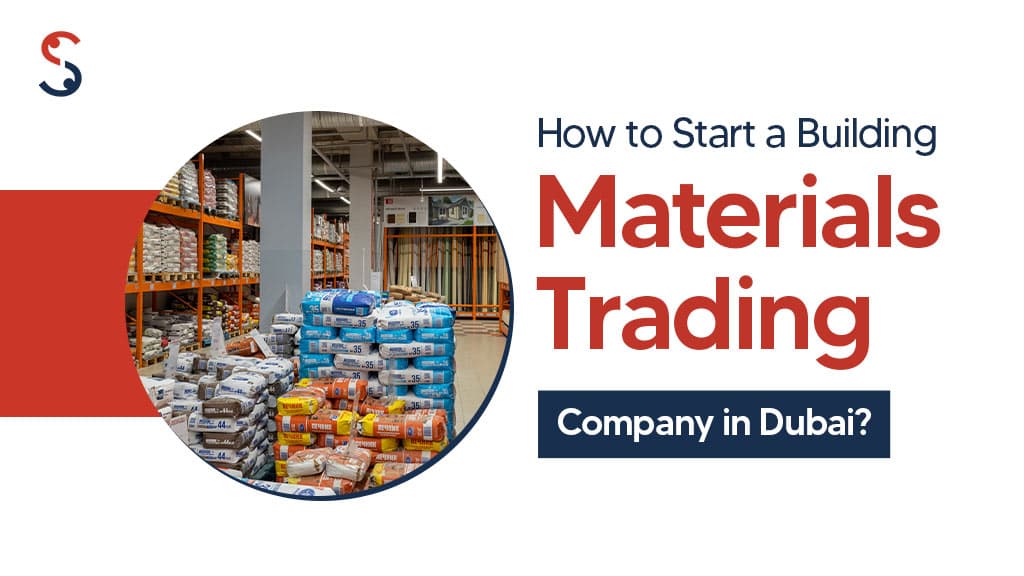
Dubai’s diverse construction market creates opportunities across several building materials categories. Entrepreneurs can select trading activities based on market demand, available capital, supplier relationships, and their target customers.
| Business Idea | Products / Focus |
|---|---|
| Wholesale Building Materials | Cement, blocks, steel, timber, tiles, and other construction materials |
| Construction Hardware Trading | Fasteners, tools, locks, hinges, brackets, and hardware products |
| Steel Trading | Steel bars, sheets, pipes, structural steel, and related products |
| Sanitaryware Trading | Washbasins, toilets, bathtubs, showers, and bathroom accessories |
| Tiles and Ceramics Trading | Floor tiles, wall tiles, porcelain, ceramics, and related products |
| Electrical Materials Trading | Cables, switches, sockets, lighting, and electrical components |
| Plumbing Materials Trading | Pipes, fittings, valves, pumps, connectors, and plumbing products |
| Flooring Materials Trading | Vinyl, laminate, wood flooring, carpets, tiles, and installation materials |
Dubai is experiencing rapid growth, particularly in the construction sector. This creates a massive demand for essential supplies. If you’re planning to start a building materials trading company in Dubai, now is the perfect time to enter the market.
Setting up a general trading business in Dubai is simple and rewarding. The city offers countless benefits, like a strong economy, global connectivity, and a business-friendly environment. With the right support from Shuraa India, you can smoothly start your trading company and take advantage of this growing demand in the construction sector.
A commercial trade licence with the appropriate building materials trading activities is generally required to operate legally in Dubai.
A building materials trading licence typically costs AED 15,000 to AED 50,000 (approximately ₹3.91 lakh to ₹13.04 lakh), depending on location, activities, office, and warehouse requirements.
Yes, building materials trading can be profitable due to Dubai’s growing construction, real estate, infrastructure, and renovation sectors.
Yes, Indian entrepreneurs can establish a building materials trading company in Dubai, subject to licensing, ownership, visa, and regulatory requirements.
Yes, you can trade building materials through a Free Zone, subject to permitted activities, trading rules, and applicable mainland requirements.
A warehouse may be required depending on your products, business activity, inventory requirements, and licensing jurisdiction.
Common documents include passport copies, proposed company name, business activity details, application forms, and office or warehouse documents.
Setup can take a few days to several weeks, depending on approvals, business activity, jurisdiction, documentation, and premises requirements.

About the author
Ritish SharmaRitish Sharma is a professional writer and UAE business advisor with expertise in corporate regulations and company setup. He helps Indian entrepreneurs understand and navigate the UAE’s dynamic business landscape, simplifying complex legal and business concepts. With actionable insights and practical guidance, Ritish empowers Indian businesses to establish, grow, and succeed in the UAE market confidently.
View all postsSpeak with Shuraa India for clear guidance on licensing, jurisdictions, visas, banking, and setup costs.