Dubai has become one of the fastest-growing industrial and manufacturing hubs in the Middle East. With advanced infrastructure, prime global connectivity, and business-friendly policies, the UAE offers excellent opportunities for manufacturers and industrial investors.
For Indian entrepreneurs and international investors planning to enter the manufacturing sector, obtaining an industrial license in Dubai is mandatory. This license allows businesses to legally produce, assemble, process, and package goods within the UAE.
Whether you are setting up a factory, production unit, or industrial warehouse, this guide will help you understand everything about the industrial license in the UAE, including benefits, requirements, costs, and the application process.
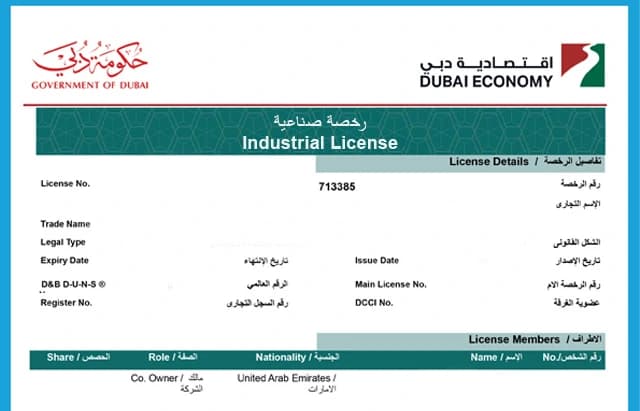
An industrial license in Dubai is a legal permit issued by the Department of Economy and Tourism (DET), formerly DED, or relevant free zone authorities. It authorises businesses to carry out manufacturing and industrial activities in the UAE.
This license is required for companies involved in:
Without a valid UAE industrial license, businesses cannot operate legally, open bank accounts, apply for visas, or enter commercial contracts.
Cannot operate legally
Cannot open bank accounts
Cannot apply for visas
Cannot enter commercial contracts
An industrial license is more than just a legal formality; it is the backbone of any manufacturing or production business in Dubai and across the UAE. It allows Indian entrepreneurs to operate lawfully, grow confidently, and build long-term success.
Having an industrial license ensures your business complies with all UAE government regulations. Operating without one is illegal and may result in heavy fines, penalties, suspension of activities, or even permanent business closure.
A licensed industrial company looks professional and trustworthy. It helps you gain confidence in suppliers, investors, banks, and government authorities. It makes it easier to form partnerships and secure funding.
With a valid industrial license in Dubai, your business can trade freely within the UAE and expand into international markets. It also allows you to participate in tenders, export goods, and work with large distributors.
An industrial license enables you to open a corporate bank account, manage business transactions smoothly, and apply for investor, partner, and employee visas. This makes it easier to hire skilled staff and scale your operations.
Many industrial businesses in the UAE enjoy attractive tax benefits, including customs duty exemptions, tax incentives, and policies that support profit retention. These advantages help reduce operational costs and improve overall profitability.
Obtaining an industrial license in Dubai comes with several long-term advantages for manufacturers, producers, and exporters. It not only legalises your operations but also supports business growth and global expansion.
An industrial license gives your business official approval to operate in the UAE. It ensures that your manufacturing activities comply with government regulations. Additionally, it helps you avoid legal risks and penalties.
Dubai's prime location connects Asia, Europe, and Africa. With an industrial license, you can easily export products to international markets and build a strong global presence.
Many UAE free zones allow foreign investors to enjoy 100% ownership without a local sponsor. This gives you complete control over your business and profits.
Industrial facilities in designated zones often benefit from discounted electricity, water, and other utility charges. This helps reduce operational expenses and improve profitability.
Businesses with an industrial license may be eligible for customs duty exemptions when importing machinery, equipment, and raw materials. This significantly lowers startup and production costs.
Dubai provides easy access to trained engineers, technicians, and industrial workers. The visa system also makes it convenient to hire international talent for specialised roles.
The UAE government actively promotes industrial development through supportive policies, funding programs, and incentives. These initiatives help businesses grow and remain competitive.
Dubai offers strong infrastructure, including modern ports, highways, warehouses, industrial zones, and logistics hubs. This ensures smooth transportation, storage, and distribution of goods.
An industrial license in the UAE covers a wide range of manufacturing sectors, including:
permitted
activity sectors
Choosing the right activity is essential for successful industrial license approval.
Food and bread manufacturing
Textile and garment production
Metal casting and fabrication
Machinery and engine manufacturing
Petroleum and chemical products
Paper and packaging industries
Electronics assembly
Plastic and rubber manufacturing
Applying for an industrial license in Dubai involves a systematic process designed to ensure legal compliance, operational readiness, and long-term business stability. Following each step carefully helps you avoid delays and start your manufacturing operations smoothly.
steps to get
your license
Begin by identifying the exact manufacturing or industrial activity you plan to undertake. The UAE authorities have a predefined list of approved activities, and your selection must align with your production process, machinery usage, and output. Choosing the correct activity ensures smoother approvals and prevents future regulatory issues.
Select a legal structure that best suits your business goals, ownership plans, and investment strategies. Common structures include a Limited Liability Company (LLC) and a Foreign Company. This decision affects profit distribution, legal responsibilities, and expansion opportunities.
Choose a professional and unique trade name that reflects your business nature. The name must follow DED guidelines and avoid restricted or offensive terms. Once approved, the name is reserved and protected for your registration process.
Apply for initial approval from the Department of Economy and Tourism (DET) to confirm that your proposed business activity and ownership structure are acceptable. This approval indicates that the government has no objection to your business setup and allows you to proceed with formal registration.
At this stage, gather and organise all documents needed for your industrial license application. These documents verify your identity, financial stability, and business feasibility. Required documents include:
Passport copies of shareholders
Passport-size photographs
Trade name certificate
Partnership agreement (if applicable)
National Media Council approval (if required)
Sector-based ministry approvals
Ensuring that all documents are accurate, up to date, and properly attested helps avoid rejections and speed up the approval process.
Once your documentation is ready, submit your industrial license application along with the required government fees. Authorities will review your business plan, technical details, and compliance standards before moving forward.
You must secure a physical office and industrial warehouse within an approved industrial zone. The premises should meet safety, size, and infrastructure requirements suitable for manufacturing activities. Virtual offices are not permitted for industrial licenses.
Depending on your industry type, you may require approval from various government departments. These may include:
Ministry of Industry and Advanced Technology
Dubai Municipality
Ministry of Health
Ministry of Environment
These approvals ensure your business follows environmental, health, and safety regulations and meets industry standards.
After all inspections, document verification, and authority approvals are completed, your industrial trade license will be issued. This officially authorises you to start manufacturing and production activities in Dubai.
With your license in hand, you can apply for investor, partner, and employee residence visas. This enables you to legally hire staff, bring skilled professionals, and manage your operations within the UAE.
The final step is opening a corporate bank account with a UAE-based bank. This account allows you to manage payments, supplier transactions, salaries, and international trade settlements efficiently and transparently.
Starting from
* Can increase based on your setup needs and operational scale.
The cost of obtaining an industrial license in Dubai varies depending on several factors, including your business activity, whether you choose the mainland or a free zone, the size of your warehouse, required government approvals, and visa requirements for staff.
Business activity type
Mainland or free zone setup
Size of warehouse
Required government approvals
Visa requirements for staff
With professional guidance, you can streamline the process, avoid unnecessary expenses, and choose the most cost-effective options for your business.
With over two decades of expertise, Shuraa India has extensive knowledge of UAE business setup, licensing procedures, and regulatory frameworks, ensuring a smooth and compliant setup process.
Shuraa India has supported thousands of Indian entrepreneurs and global investors in successfully establishing their ventures in the UAE, building a strong reputation for reliability and results.
We understand the goals, challenges, and expectations of Indian business owners entering Dubai's industrial sector. Our team offers culturally aligned guidance, and practical solutions customised to your needs.
Every industrial setup is customised according to your business activity, budget, and long-term growth plans, ensuring flexibility and scalability.
We maintain complete transparency with no hidden charges, providing a clear cost breakdown from day one so you can plan confidently.
From initial consultation to post-setup assistance, our team stays with you at every step, offering continuous support to ensure your business runs smoothly.
Setting up a manufacturing business in Dubai becomes simple with the right partner. We help Indian entrepreneurs and global investors launch their industrial ventures with confidence.
Shuraa India Provides complete support for:
Industrial license registration
Approvals and documentation
Warehouse leasing
Visa processing
Bank account opening
Renewals and compliance
An industrial license in Dubai is required for businesses involved in manufacturing, production, processing, packaging, and assembling goods. It allows companies to legally operate factories, workshops, and production units within the UAE.
Yes, foreign investors can obtain an industrial license in the UAE. Many free zones and mainland areas now allow 100% foreign ownership, making it easier for international entrepreneurs to set up industrial businesses.
Yes, having a physical warehouse, factory, or production facility is compulsory. Authorities require a registered space to ensure that manufacturing activities are carried out in a compliant and safe environment.
The process usually takes between 2 to 4 weeks. However, the timeline may vary depending on document submission, government approvals, and inspection requirements.
Yes, Shuraa India offers complete renewal and compliance support. They assist with license renewals, documentation, regulatory updates, and ongoing business compliance to ensure smooth operations.
Speak with Shuraa India for clear guidance on licensing, jurisdictions, visas, banking, and setup costs.