
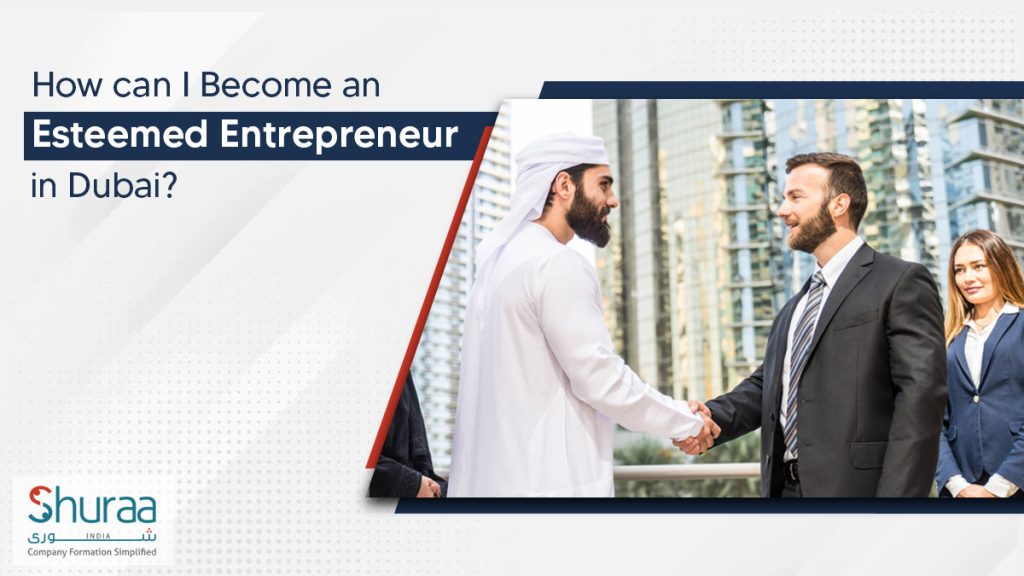
Dubai is known for having a thriving business environment that attracts entrepreneurs from all over the world. One of the key factors that make Dubai attractive for business is its strategic location, which serves as a gateway between East and West.
Additionally, the city has a highly developed infrastructure, with world-class transportation, communication, and financial systems. Moreover, Dubai's government has established policies and initiatives to encourage entrepreneurship, such as the Dubai Plan 2026, which aims to make Dubai a global hub for entrepreneurship and innovation. Here, we will discuss in detail how to become an esteemed entrepreneur in Dubai.
It is obvious how far Dubai's influence has stretched, with over 200 different nationalities represented among the over 80% of people who are expatriates. It is simple to understand the reasons for the emirate's fame. Doing business in this region of the world has several advantages, including a favorable tax system, a friendly atmosphere, and a fantastic location.
How Indians Can Become Entrepreneurs in Dubai?
Here are the simple and easy steps to become an entrepreneur in Dubai, UAE:1. Conduct Market Research
To become an entrepreneur in Dubai, the first step is to conduct market research to identify potential business opportunities. You can start by researching the current market trends, the needs of the target audience, and the existing competition. This will help you identify gaps in the market that you can fill with your business idea.
2. Develop a Business Plan
Once you have identified a business idea, the next step is to develop a comprehensive business plan. This plan should outline your business goals, target audience, marketing strategy, financial projections, and operations plan. A well-written business plan can help you secure funding and investors for your business idea. Overall, developing a comprehensive business plan is a critical step in becoming an entrepreneur in Dubai.
3. Register Your Business
To legally operate a business in Dubai, you will need to register your company with the Department of Economy and Tourism (DET). This process involves obtaining a trade license, registering your business name, and obtaining any necessary permits and approvals. The trade license is essential to operate your business in Dubai. The type of license required depends on the nature of your business activity.
4. Set up Your Office
Once you have secured funding and obtained the necessary licenses, you can start setting up your office. This involves finding a suitable location, setting up your infrastructure, and hiring staff. You must consider the skills and experience required for each role, and the cost of salaries, benefits, and other expenses. Moreover, you can advertise your job openings on job portals or enlist the services of a recruitment agency to find suitable candidates.
5. Launch Your Business
With everything in place, it is time to launch your business. This involves implementing your marketing strategy, launching your products or services, and establishing your brand in the market. This includes developing a brand name, logo, and visual identity, as well as building a strong online presence through your website and social media accounts. Launching a business in Dubai can be a challenging process, but with a solid business plan, you can establish a strong presence in the market and grow your business over time.
6. Monitor and Adjust
The last step is to monitor your business's progress and make necessary adjustments to improve its performance. You should regularly review your financial statements, analyze customer feedback, and make changes to your business strategy as needed. Overall, monitoring your business's progress and making necessary adjustments is an ongoing process that requires careful attention to detail and a willingness to adapt.
Benefits Of Entrepreneurship in Dubai
Explore the benefits of becoming an entrepreneur in Dubai, including tax incentives, a diverse market, strategic location, and robust support systems for startups.
1. Strategic Location
Dubai's strategic location makes it an ideal place to establish a business, with easy access to markets in the Middle East, Asia, Europe, and Africa.
2. Diverse Economic Opportunities
The city's diverse economy provides many opportunities for entrepreneurs to tap into different industries, from finance and logistics to tourism and technology.
3. Business-Friendly Environment
Dubai has a business-friendly environment with a supportive legal framework and tax incentives that can help entrepreneurs save money and reduce the bureaucratic burden.
4. World-Class Infrastructure
The city has a well-developed infrastructure with world-class facilities that can support the growth of your business, including transportation, communication, and technology.
5. Skilled Workforce
Dubai offers a skilled and multilingual workforce, making it easy to find talented and experienced professionals to join your team and help you achieve your business goals.
6. Strong Networking Culture
The city's strong networking culture can provide you with valuable connections and partnerships that can help your business thrive.
7. High Quality of Life
Dubai offers a high quality of life, with excellent healthcare, education, and leisure facilities, providing you and your employees with a comfortable lifestyle while pursuing your entrepreneurial dreams.
Top 10 Successful Indian Entrepreneurs in the UAE
| # | Entrepreneur | Company | Industry | Key Achievement |
|---|---|---|---|---|
| 1 | Yusuf Ali M.A. | Lulu Group International | Retail | Built one of the largest hypermarket chains in the Middle East |
| 2 | Sunny Varkey | GEMS Education | Education | Founded one of the world’s largest private school networks |
| 3 | Rizwan Sajan | Danube Group | Construction & Real Estate | Grew a trading firm into a multi-billion-dirham group |
| 4 | Mukesh Jagtiani | Landmark Group | Retail | Expanded major retail brands across the GCC |
| 5 | Shamsheer Vayalil | Burjeel Holdings | Healthcare | Built a leading healthcare network in the UAE |
| 6 | B.R. Shetty | NMC Health | Healthcare | Pioneer in the UAE’s private healthcare sector |
| 7 | P.N.C. Menon | Sobha Group | Real Estate | Developed premium real estate projects in Dubai |
| 8 | Azad Moopen | Aster DM Healthcare | Healthcare | Built a major hospital and clinic chain in GCC |
| 9 | Firoz Merchant | Pure Gold Jewellers | Jewellery | Established leading jewellery retail brand |
| 10 | Micky Jagtiani | Landmark Group | Retail | Built one of the largest retail empires in the region |
Top 10 Challenges Indian Entrepreneurs Face in Dubai
To start a company, new entrepreneurs in Dubai can face a lot of difficulties. The following is a list of typical obstacles an entrepreneur in Dubai will encounter when starting a business:
1. Navigating VAT Regulations and Tax Compliance
Until January 2018, Dubai and the broader United Arab Emirates operated as a completely tax-free jurisdiction. Many entrepreneurs from India and around the world leveraged these tax incentives to launch and scale their businesses in the region, enjoying significant competitive advantages through zero taxation on personal income and corporate profits.
However, the UAE has since adopted the Value Added Tax (VAT) system aligned with the Gulf Cooperation Council framework, implementing a 5% VAT on most goods and services. More recently, in June 2023, the UAE introduced a federal corporate tax of 9% on taxable profits exceeding AED 375,000.
Challenges Indian Entrepreneurs Face:- Understanding which goods and services are subject to VAT and which are exempt
- Implementing proper accounting systems to track VAT on purchases and sales
- Filing accurate VAT returns on time (quarterly for most businesses)
- Managing cash flow implications of VAT collection and payment
- Adapting to corporate tax regulations and compliance requirements
- Maintaining economic substance to benefit from tax exemptions in free zones
- Navigating transfer pricing regulations for businesses with Indian parent companies
2. Hiring and Retaining the Right Workforce
Building a skilled, motivated team is fundamental to business success anywhere in the world, but Dubai presents unique workforce challenges for Indian entrepreneurs.
Key Workforce Challenges:- Talent shortage in specialized sectors: Finding professionals with niche skills in technology, healthcare, finance, and other specialized sectors can be extremely challenging and time-consuming.
- High competition for talent: Dubai attracts professionals from over 200 nationalities, creating intense competition for qualified candidates, especially in high-demand sectors.
- Visa and labor regulations: Understanding Emiratisation requirements (quotas for UAE national employees in certain sectors), visa sponsorship obligations, and labor law compliance adds complexity to hiring.
- Salary expectations: Dubai's tax-free salary structure means candidates often have high compensation expectations that may strain startup budgets.
- Cultural diversity management: Managing teams comprising multiple nationalities requires strong cross-cultural leadership skills.
- Employee retention: High mobility among expatriate workers means retention can be challenging, particularly for startups competing against established corporations.
The hiring process can consume valuable time that small teams need for core business development activities. A lack of qualified candidates can result in severe operational delays, postponing the introduction of new products or services. No startup, especially in the early stages, can afford extended hiring timelines or frequent employee turnover.
3. Limited Funding Availability and Access to Capital
Securing adequate funding remains one of the largest obstacles to launching and scaling a new business in Dubai for Indian entrepreneurs. Despite Dubai's reputation as a financial hub, startups often struggle with capital access.
Funding Challenges:- Conservative banking approach: UAE banks typically require substantial collateral, established business history, and proven cash flows before extending credit to startups. New businesses often don't meet these criteria.
- Misunderstood business models: Banks and traditional investors sometimes fail to understand innovative startup models, particularly in technology and digital sectors, making them hesitant to invest.
- Long-term investment hesitancy: The necessity of patient, long-term capital for startups to achieve profitability is not always appreciated by conventional financing sources.
- Limited venture capital: While growing, the venture capital ecosystem in Dubai is still developing compared to mature markets like India's major cities, Silicon Valley, or London.
- Cross-border funding complications: Indian entrepreneurs may face regulatory hurdles when attempting to bring investment capital from India due to Reserve Bank of India regulations and UAE financial compliance requirements.
- Government initiatives: Dubai SME, Mohammed Bin Rashid Fund for SMEs, and Khalifa Fund offer financing programs
- Angel investor networks: Dubai Angel Investors, MENA region angel groups
- Venture capital firms: Emerging VC ecosystem focused on MENA startups
- Crowdfunding platforms: Regulated equity and reward-based crowdfunding
- Business accelerators and incubators: In5, Dubai Future Accelerators, TURN8, Sheraa
- Family offices: Significant wealth concentration in the UAE creates family office investment opportunities
- Strategic corporate investors: Established companies seeking innovation partnerships
4. Locating the Ideal Office Space
Choosing the optimal location for your business in Dubai is a critical decision that significantly impacts operational efficiency, brand perception, customer accessibility, and overall business success.
Office Space Challenges:- High rental costs: Prime business locations in areas like Dubai Marina, Downtown Dubai, Business Bay, and DIFC command premium rental rates that can strain startup budgets.
- Lease terms and deposits: Commercial leases typically require multiple cheques (3-12 post-dated cheques for the year), substantial security deposits, and commission payments to agents.
- Size restrictions: Depending on your business license type and chosen jurisdiction (mainland vs. free zone), minimum office space requirements may apply.
- Ejari registration: All commercial leases must be registered with Ejari, the Dubai Land Department's official tenancy registration system, adding administrative steps.
- Fit-out requirements: Many commercial spaces are delivered as shells, requiring significant investment in fit-out, furniture, IT infrastructure, and utilities setup.
- Location-license alignment: Your office location must align with your license jurisdiction—mainland licenses require mainland offices, free zone licenses require offices within the specific free zone.
5. Effective Financial Management in a High-Cost Environment
Managing finances carefully is crucial for any new business, but in Dubai, this becomes particularly critical due to the city's high cost of living and reputation for luxury.
Financial Management Challenges:- High operational costs: Beyond rent, costs for utilities, telecommunications, employee benefits, and business services can quickly accumulate.
- Luxury lifestyle temptation: Dubai's premium lifestyle offerings can tempt entrepreneurs to make unnecessary expenditures on office furnishings, entertainment, and status symbols that don't contribute to business growth.
- Cash flow management: The common practice of post-dated cheques and delayed payment terms in B2B transactions requires careful cash flow planning.
- Currency fluctuations: For Indian entrepreneurs maintaining connections with India, AED-INR exchange rate fluctuations can impact cross-border transactions and remittances.
- Seasonal business variations: Many sectors experience significant seasonal fluctuations due to summer exodus and Ramadan business patterns.
According to various business studies, inadequate financial management is cited as the primary reason over 80% of startups in Dubai fail within their first three years. Poor budgeting, overexpansion, and insufficient cash reserves are the most common financial mistakes.
6. Overcoming the Language Barrier
While English is widely spoken in Dubai's business community, Arabic remains the official language of the UAE, creating specific challenges for Indian entrepreneurs.
Language-Related Challenges:- Government documentation: Many official documents, forms, and regulations are published in Arabic first, with English translations sometimes delayed or requiring interpretation.
- Legal contracts: Commercial agreements, tenancy contracts, and supplier agreements may be in Arabic or bilingual, requiring accurate translation to ensure full understanding of terms and obligations.
- License applications: Certain business license applications and government approvals require Arabic documentation or translation of supporting documents.
- Court proceedings: Should any legal disputes arise, court proceedings are conducted in Arabic, necessitating official translation services.
- Local market access: When targeting local Emirati customers or government entities, Arabic language capabilities provide significant advantages.
- Cultural nuances: Understanding Arabic honorifics, business etiquette, and communication styles enhances relationship building with local partners and clients.
7. Navigating Intense Market Competition
Dubai's attractive business environment and strategic location have created a highly competitive marketplace across virtually every sector.
Competitive Challenges:- Market saturation: Popular sectors like trading, retail, hospitality, and real estate consulting face significant saturation with established competitors.
- International competition: Indian entrepreneurs compete not only with local businesses but also with companies from Europe, Asia, Africa, and the Americas, all leveraging Dubai as a regional hub.
- Price pressure: Intense competition often leads to price wars that can erode profit margins, particularly challenging for startups with limited resources.
- Innovation imperative: To differentiate and capture market share, continuous innovation in products, services, and customer experience is essential.
- Quality expectations: Dubai's affluent customer base maintains high expectations for quality, service, and brand experience, requiring consistent excellence.
- Digital disruption: Technology-enabled competitors and e-commerce platforms continuously disrupt traditional business models.
8. Understanding Complex Governmental and Legal Regulations
The UAE's regulatory framework, while increasingly streamlined, remains complex with frequent updates and sector-specific requirements that can challenge new entrepreneurs.
Regulatory Challenges:- Multiple jurisdiction options: Choosing between mainland, free zone (with 40+ options), or offshore structures requires understanding complex trade-offs regarding market access, ownership, taxation, and operational flexibility.
- Ownership structures: While 100% foreign ownership is now permitted for most mainland activities, certain strategic sectors still require local partnership or have specific ownership limitations.
- License classifications: Selecting appropriate business activities and license types (commercial, professional, industrial, tourism) has significant implications for permitted operations and costs.
- Regulatory changes: Business and tax regulations are subject to periodic updates, requiring ongoing monitoring and adaptation. The introduction of corporate tax and economic substance regulations are recent example of significant changes.
- Sector-specific regulations: Industries like healthcare, education, food services, and financial services face additional regulatory oversight from specialized authorities beyond basic commercial licensing.
- Compliance costs: License fees, approval costs, and ongoing compliance requirements represent a substantial investment, particularly for complex business structures.
- Free zone vs. mainland restrictions: Free zone companies face limitations on conducting business directly in the UAE mainland market, requiring distributor arrangements or mainland branch offices.
9. Adapting to and Respecting Cultural Values
Dubai is renowned for its multicultural workforce and cosmopolitan environment, with over 200 nationalities living and working in the emirate. This diversity creates tremendous opportunities but also requires cultural sensitivity and adaptation.
Cultural Considerations:- Islamic traditions: While Dubai embraces modernity and forward-thinking business practices, it maintains strong Islamic cultural foundations that influence business conduct, social norms, and legal frameworks.
- Business etiquette: Understanding appropriate greetings, meeting protocols, negotiation styles, and relationship-building approaches differs from Indian business culture in subtle but important ways.
- Ramadan considerations: The holy month of Ramadan brings specific regulations regarding working hours, eating/drinking in public, and business pace that require adaptation.
- Dress codes: Professional appearance standards, particularly in government interactions and formal business settings, tend toward conservatism.
- Gender dynamics: While Dubai is progressive in gender equality compared to the broader region, understanding appropriate professional interactions and cultural sensitivities is important.
- Weekend schedules: The UAE weekend is Saturday-Sunday, while many Indian businesses operate on Sunday-Monday or Saturday-Sunday schedules, requiring coordination.
- Hierarchy and respect: Emirati culture places significant emphasis on respect for authority, seniority, and social hierarchy in business relationships.
10. Effective Human Resource Management Across Cultures
Managing people effectively is crucial for business success anywhere in the world, but Dubai's extremely diverse workforce creates unique human resource challenges and opportunities.
HR Management Challenges:- Cultural diversity: Managing teams comprising employees from India, the Philippines, Western countries, Arab nations, Africa, and elsewhere requires sophisticated cross-cultural leadership skills.
- Communication styles: Different cultural backgrounds bring varying communication preferences, from direct to indirect, hierarchical to egalitarian, creating potential for misunderstanding.
- Labor law compliance: UAE labor law governs employment contracts, working hours, leave entitlements, end-of-service benefits, and dispute resolution, requiring a thorough understanding and consistent application.
- Emiratisation requirements: Certain sectors and company sizes face quotas for hiring UAE nationals, requiring proactive recruitment strategies.
- Visa sponsorship responsibilities: As a sponsor, employers bear legal and financial responsibilities for employee visas, including potential penalties for violations.
- Compensation structures: Balancing competitive compensation across different nationalities with varying cost-of-living expectations and market benchmarks is complex.
- Performance management: Establishing fair, culturally sensitive performance evaluation and feedback systems that work across diverse teams requires thoughtful design.
- Conflict resolution: Cultural differences can lead to workplace conflicts requiring culturally aware mediation and resolution approaches.
Overcome These Challenges with Expert Support from Shuraa India
As you can clearly see, even in Dubai, where business setup processes are increasingly streamlined, significant obstacles and complexities exist when starting and growing a company. The challenges span regulatory compliance, financial management, cultural adaptation, talent acquisition, and operational execution—each requiring specific knowledge, experience, and resources to navigate successfully.
This is precisely why Shuraa India provides comprehensive, hassle-free business establishment services specifically designed for Indian entrepreneurs entering the Dubai market. With a deep understanding of both Indian business culture and UAE regulatory requirements, Shuraa India serves as your trusted bridge to successful Dubai business operations.
Get your Dubai entrepreneur visa with Shuraa India
In recent years, Dubai has emerged as a leading hub for entrepreneurship and innovation, attracting entrepreneurs from around the world to establish and grow their businesses. The city's strategic location, diverse economy, business-friendly environment, well-developed infrastructure, skilled workforce, and high quality of life make it an ideal place to pursue entrepreneurial dreams and achieve business success.
To become an entrepreneur in Dubai, there are several important steps mentioned above. In conclusion, becoming an entrepreneur in Dubai can be a challenging and rewarding journey, with many opportunities for growth, innovation, and success. By following these steps and leveraging the city's unique advantages, you can establish and grow a successful business in Dubai and contribute to the city's vibrant and dynamic entrepreneurial ecosystem.
Ready to Become an Entrepreneur in Dubai? Enjoy tax-free income, full ownership & a booming market in the UAE’s top business destination! Contact at Shuraa India.